Nakahara Misaki MBTI性格类型
性格
"Nakahara Misaki是什么人格? Nakahara Misaki是MBTI中的INFJ人格类型,九型中的2w1 - sx/so - 261,五大类型中的RLOAI,Socionics中IEI类型。"
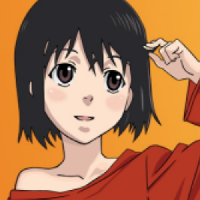
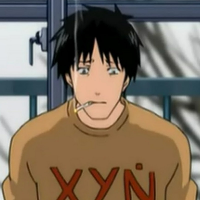
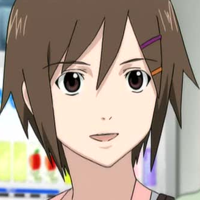
> *“i’m just a sweet little girl who wants to help you out ! you’re the one with all the problems..”* # MISAKI NAKAHARA ; SP2 ARGUMENT (All quotes are pulled from the E2 book, the Self Preservation subtype section) To understand Misaki, we must look at her behavior throughout the series, as most of her characterization is kept secret until the finale of the series. She presents as mysterious, and this is intentional writing-wise. Her first notable appearance with dialogue in the series is her approaching Satou, offering him a contract deal that would allow her to “cure him” of his hikikimori syndrome. This first introduction actually tells us a lot about Misaki and her presentation. The way she moves and presents herself has much to do with the image that she projects. Her tone of voice, her movements, and even her facial expression are all gentle. There’s a particular softness to her appearance, she doesn’t dress especially fashionable or make any effort to stand out visually. There’s a sort of plainness to her appearance, coupled with a carefully sweet voice and mannerism that is enthralling. By presenting as sweet, soft, saccharine, she aims to win the favor of the other by projecting a sense of innocence to avoid being negatively received within the first impression she makes. *“The term “tender” is often associated with affection, kindness, and warmth—qualities typically linked to childhood, evoking an image of innocence and docility. Self-preservation E2s embody this quality naturally, drawing others in with their gentle and soft demeanor. This tenderness serves a purpose: it attracts protection and care, ensuring they remain untouched by the harshness of life and relationships.”* *”However, in this subtype, pride has deflated because shame makes its appearance, causing the self-preservation E2 to present themselves to others as someone tender and childlike, someone who wants to be loved without relying on sexual seduction or social relevance. They therefore seduce through delicacy and fragility.”* The use of a contract to express this is actually quite the analogy, the agreement is for Satou to show up to the sessions that she offers him to help therapize his hikikimorism, and participate. If he fails to show up or participate, the agreement is that he is obligated to pay a fine of one million Yen. Misaki, who is desperate for somebody to satisfy her sense of self worth, to prove her usefulness, pleads with Satou to sign her contract, in which guarantees his presence in her life and interaction with her, guarantees him receiving her services and feeding into her “project” in which the end goal is kept confidential until the obligation is fulfilled. *“They create the illusion of deep intimacy, making others feel uniquely special, as if they reserve this level of closeness just for them. But, of course, they expect the same treatment in return. In every relationship, they repeat the lie they learned: “I will always be by your side, your source of light and joy, and in return, you will forever grant me the role of a special, irreplaceable person, who can do everything they want.”* This aspect of Misaki is important to understanding her character. This is what justifies the importance of the cat scene, because in their relationship, Satou is the cat and Misaki is the one continually feeding it so that it will come back to her. Outside of the contract, Satou has no obligation to Misaki, which is why she continues to put effort into “curing him” and continually putting herself in a position where he is receiving some sort of service from her to create a sense of indebtedness and therefore obligation to her. Satou, who is an incredibly aloof character, is the one thing that Misaki has to cling onto, and so she tries to put herself in a position where that importance is reciprocated to justify her sense of pride, to show that he does in fact need her and the things that she does for him. *“Their actions are driven by the need to be necessary for others, which creates a feeling of debt around them.”* *“The underlying issue for the self-preservation E2 is that they don’t feel valuable or deserving of love. To counter this, they do things for others in order to feel needed, thinking that this will prevent them from being abandoned and that others will offer them protection in return.”* (1/3?)
背景
相关人物
Satou Tatsuhiro

Yamazaki Kaoru
Kashiwa Hitomi
Kobayashi Yuuichi

Pururin
Kobayashi Megumi
Jougasaki Akira
Midorikawa Nanako