Antinous тип личности MBTI
Личность
"Какой тип личности является Antinous? Antinous - это тип личности INFP в mbti, 4w3 - sx/so - в Enneagram, в Big 5, IEI в Socionics."
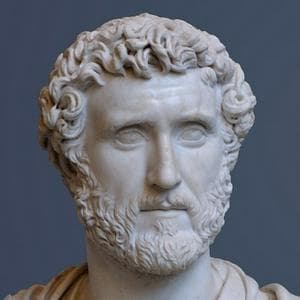
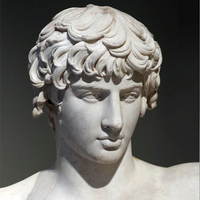
[1/2] Honestly, the INFP profile fits him perfectly, both his personality and his "vibe" align seamlessly. As a Fi-dominant, he would do anything for the person he loved. He even sacrificed his own life, offering himself to the Nile River with the sole purpose of helping Hadrian extend his longevity while the Emperor was suffering from a severe illness. I’ve wanted to dive deep into analyzing Antinous's personality and why I believe INFP is the best fit for him. Of course, the story of Antinous is scarce and lacks concrete evidence for a definitive analysis, his personality wasn't documented in great detail, and most sources are influenced by the cult of deification after his death. However, it’s not as if there’s no information at all. I have searched for and read their love story that I could find (I am TRULY obsessed with their romance, lol). Some information comes from rumors or records that might be fictional or oral tradition, but parallel to that, these details are recorded in official chronicles (which might be 50%-70% accurate) and ancient literary works. 1. Intellectual Connection and Intuitive Curiosity: "Hadrian met Antinous during a tour of Asia Minor around 123 AD. Enchanted by the young man's beauty and intellect, Hadrian took Antinous into his retinue. For years after, they were almost inseparable, hunting together, traveling the empire, and discussing art." "Hadrian once praised Antinous for having the wisdom of a "mature man", despite his youth." --> Yet, Antinous's role was described as a "soul companion" and a "sharer of passions" rather than an official helping with administrative tasks, approving documents, or political work. The intelligence Hadrian mentioned likely referred to philosophical knowledge, a curiosity about the universe, or a deep dive into human reason, values, the meaning of existence, and ethics. He delved into those profound questions that the Romans highly valued. An INFP always curious, somewhat detached from the real world, and constantly seeking the inherent meaning of all things. 2. Emotional Support and Shared Passions: Hadrian was an emperor under immense pressure, with a temperament that was often erratic and melancholic. Antinous was seen as the only source of comfort that helped him maintain psychological balance. Antinous's presence helped Hadrian sustain his inspiration for art and architecture. He helped the Emperor by sharing his mental burden, accompanying him on many journeys, and being the only person Hadrian could truly trust emotionally whenever he felt overwhelmed. "He was not just a passive lover but a partner who shared Hadrian's intense passions, such as hunting, notably the famous lion hunt in Libya, and traveling the empire. He was described as a skilled horseman and proficient with a spear." --> Hunting was their strongest bond. They hunted lions and wild boars together. Hadrian even minted coins and commissioned statues to commemorate these hunts as symbols of their shared bravery. He accompanied the Emperor into the deep woods to hunt and sat under the moonlight to discuss philosophy and poetry. Antinous’s sensitivity to philosophical beauty and nature is a hallmark of an INFP. Both he and Hadrian disliked the stifling constraints of court etiquette, finding freedom in vast, creative spaces, both sharing the "Intuitive" trait. 3. The Quiet, Selfless Fi-Dom: Hadrian was a "Philhellene" (a lover of Greek culture). Rumor has it that Antinous often played the role of "muse," discussing literature and art with him. "Antinous was always portrayed with a soft, pensive beauty, somewhat detached from the world around him." "Hadrian loved Antinous not just for his beauty, but for the kinship of their souls." Unlike many "favorites" in history who exploited the monarch's favor to interfere in politics, Antinous was different. He had no interest in power. There are no records suggesting he used his influence for personal gain or political meddling. He remained a quiet companion. While others might use such an opportunity to appoint family members or take bribes, Antinous’s presence was purely emotional. Based on historical records of the Roman Empire, he was a silent youth, always standing behind or beside the Emperor as a symbol of beauty and loyalty. This reflects Fi-dom loyalty, deep, internal affection and purity toward their partner. 4. The Melancholy of an Inner World: Historical records describe Antinous as having a melancholic appearance. Most statues of him share a common trait: a slightly tilted head and a pensive, sorrowful gaze. This reflects someone who lives deeply within their Inner World, a characteristic of an INFP, pensive and reflective, not paying much attention to the outside world but seeking an internal connection. --> This also suggests his demeanor in public: perhaps shy, hesitant, or reserved. He always walked behind Hadrian or stayed close to him, rarely engaging in conversation with high-ranking officials.
биография
Antinous (also Antinoüs, Latin: Antinous) or Antinoös (Ancient Greek: Ἀντίνοος, romanized: Antínoös; 27 November, c. 111 – before 30 October 130) was a Bithynian Greek youth and a favourite beloved of the Roman emperor Hadrian. After his premature death before his twentieth birthday, Antinous was deified on Hadrian’s orders, being worshipped in both the Greek East and Latin West, sometimes as a god (theos) and sometimes merely as a hero (ἥρως, hḗrōs).