Gintoki Sakata MBTI 성격 유형
인격
"Gintoki Sakata은 어떤 성격 유형입니까? Gintoki Sakata은 mbti의 INTP 성격 유형입니다. enneagram의 9w8 - sp/sx - 974, big 5의 RCUEI, socionics의 SLI입니다."
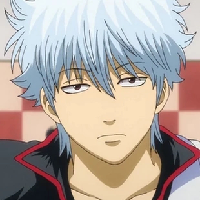
I think basically everyone on this site that knows about cognitive functions can easily realize that Gintoki belongs to the Ti/Fe axis and that his Ti is higher than his Fe, so obviously Gintoki is an XXTP type. Gintoki is sarcastic and unattached yet he values connections more than anyone in the series, this is literally Ti/Fe axis tinted with enneagram 9 core fear of loss and separation. Anyone who has watched Gintama can also infer that his major wish is to protect his loved ones, the inability to do so it's what haunts him the most. To protect others, Gintoki came up with his own set of rules that he consistently follows. The way he helps people derive from this inner logical code (Ti). He also usually adds his own twist (which is why this help comes off as weird), which could hint toward auxiliary Ne. Another thing that supports this argument is that he’s continuously speaking through metaphors. Gintoki rarely makes comparisons with what’s going on around him (for the XSTP case), but rather tends to link the present moment with hypothetical scenarios and past experiences (Ne/Si). Here are a few examples: "If we're unable to climb down the mountain, then we won't know whether there's another mountain to climb up." "I'll just relax here and cast my fishing line, I'll catch a shooting star or two and release them to the sky." "I'll give you a limb or two. However, no matter how many you cut... this string... this rotten bond... If you think you can cut it, then just try!" If he’d be an XSTP, the Se/Ni axis would make him want to experience his environment as a whole because the Se/Ni axis over-commits to singular events or concepts (take for instance Zura and Takasugi who are Ni doms). Instead, he chooses to abstract from ongoing events in favor of establishing connections with other events through analogies and comparisons. Indeed, Gintama's humor is very Ne, but Gintoki regularly brainstorms random ideas or explanations in comedic arcs, and in serious arcs he always imparts advice via metaphors or past experiences, suggesting he uses Ne/Si over Se/Ni. I think one of the main differences between Katsura and Takasugi vs Gintoki that makes clear that Katsura and Takasugi use Ni and Gintoki doesn’t is the way they dealt with the war. After the war, both Katsura and Takasugi envisioned their Ni-driven ideals (Katsura became the leader of the Joui and Takasugi the leader of the Kiheitai) and built their characters surrounding those ideologies that nested their wishes at their core, since they are characters that are rooted in reality - at least, in an underlying concept present in reality. Gintoki takes a different direction: ➼ "What's the use of fighting futile fights? Do you really intend to lose more of your friends for something like that? I'll pass on that, as long as I'm alive I'll live by my own rules. I'll live how I see beautiful and protect those I hold dear." He deems war futile, that’s why he refuses to participate in political conflicts. War holds no meaning to him, because in the process he risks losing his loved ones, and since that's what he wants to avoid at all costs, it'd be irrational to participate in something that jeopardizes what he wants to protect. Gintoki came up with his own systematic principles with Ti that hold the underlying premise of protecting his loved ones. Zura envisions a better future, and that’s why he keeps fighting against the Bakufu, even if experience has shown him that he would lose loved ones in the process. Gintoki isn’t blind to past events and prioritizes what experience has taught him over Katsura’s ideal (Si vs Ni). So basically, Gintoki created a cohesive rule system by taking away the logical principles he withdrew from past experiences lived in the war, which is basically the product of Ti and Si working together. Considering the code he's so keen on protecting and following is strongly influenced by his past, I hardly doubt we can say that he doesn't value former experiences (that's why I also doubt he'd have inf Si). Si/Ne axis seeks to cognize the most dependable and lasting qualities of events, based on a tentative sampling of varying perspectives, which is what along with Gintoki's Ti, allowed Gintoki's inner framework of principles to come forward. ➼ "If you've got enough free time to fantasize about your beautiful death... Why don't you just live your life beautifully to the end?" Follows that same train of thought I’ve been talking about. Gintoki saw Shoyo, Zura, and Takasugi get lost in their ideals, failing to see they were sacrificing their loved ones in the process. When Gintoki says things about protecting what’s in front of him, I don’t think it means he uses Se. Alternatively, that's the resulting product of his precepts (Ti) that deem pointless and nonsensical the ideals that talk about improvement and freedom yet let people die and get hurt in the process. (1/2)
전기
Gintoki is extremely lazy. He is often seen wearing a dumb expression on his face and spends his days lounging around reading Shounen Jump whilst imparting wise and sage-like advice to his younger employees, even though he doesn't actually know what he's talking about most of the time. Due to his poverty and unwillingness to do mostly anything, he is always behind on his rent and often runs away when Otose, his landlady, comes to collect the payment. He often blows all of his savings on Pachinko and other gambling games, which Shinpachi and Kagura often scold him for. However, even though he is lazy, Gintoki is quite dedicated to his job and tries to help people with the best of his abilities (usually in a very strange and twisted way). He is sarcastic and unattached but he values connections more than anyone in the series. For the most part, Gintoki is content with hanging out with his friends. However different aspects of his personality emerge depending on the situation.
인격 correlate
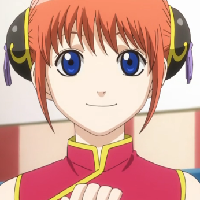
Kagura
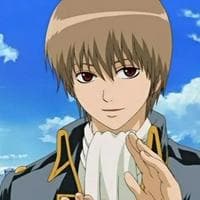
Sougo Okita
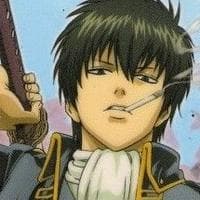
Toushirou Hijikata
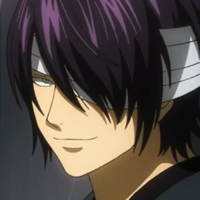
Shinsuke Takasugi
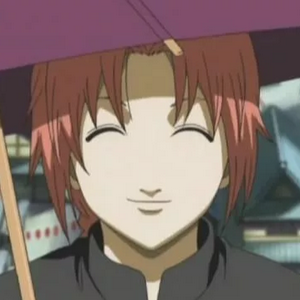
Kamui
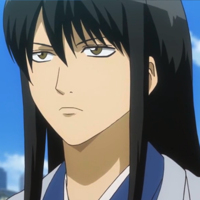
Kotarou Katsura
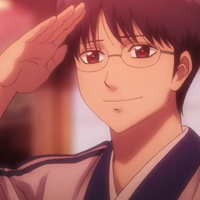
Shinpachi Shimura
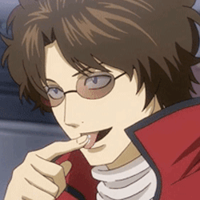
Sakamoto Tatsuma