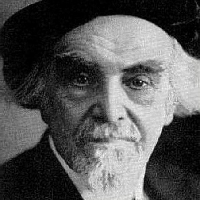
Martin Heidegger tipo di personalità MBTI
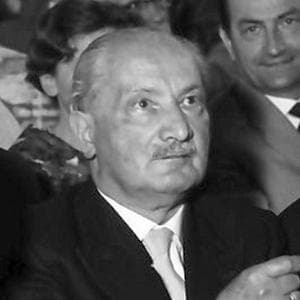
Personalità
"Che tipo di personalità è Martin Heidegger? Martin Heidegger è un tipo di personalità INTJ in mbti, 5w4 - sp/so - 514 in enneagram, RLOEI in big 5, ILI in socionics."
Michael (see his post below) made a remarkable case for an ISTJ Heidegger, which was sorely in need of being presented. I think that now it is the turn of defenders of the INTJ interpretation to step up to the plate. In what follows I attempt just this, while trying to keep the explanations as simple as possible for clarity's sake. It's very important to beware of the function↔content fallacy, which roughly claims this: that a function is equivalent to the content of the individual's thought process. In other words, to equate e.g. a conservative worldview with Si, a mystical worldview with Ni, individualism with Fi, altruism with Fe, etc. The use of a cognitive function has nothing to do with the content of one's thoughts, and everything to do with the structure of one's thinking. There are reasons to believe that some correlations exist between function and content to some extent, but the relation is weak and rarely more than anecdotal. Now if you take the content of Heidegger's thought and mistakenly take it for the mirror into his cognitive makeup, then you have every reason to type him ISTJ. He was definitely conservative in temperament, and Michael is right that the past-present-future relationship that articulates his thinking about Being ('ecstatic temporality', as he called it—which I incidentally pinched for the title of my book on the INFJ) the past looms large. Heidegger liked order, craved a return to man's pastoral sense of wholeness with nature, distrusted technology, and so forth. Not exactly what you'd call a 'future oriented' thinker. The problem, of course, is that the equivalency of function and thought content is a fallacy. So the above arguments don't actually do much work to make the case for ISTJ. We have instead to look at the structure of his thinking. Difficult to say? Not quite so. If you agree with Wittgenstein that language and thought are intimately woven together, then you only have to pay close attention to the way Heidegger writes to get a grip on the form of his thought process. The way his sentences and paragraphs hold together is a reflection of the way that his thoughts hold together, so you can get a sense of the structure of the entire web. And what do we see? A highly obscure, abstract style, full of neologisms, incredibly idiosyncratic claims on etymology that have since been shown to be inaccurate (aletheia being the most famous example); and perhaps most importantly, in Being and Time as a whole book, a layered, spiralling structure of hermeneutical interpretation starting from the everyday-ness of Dasein to the historicity of Being as such. Don't you see, in this particular architecture, the process whereby inferior Se gathers the 'everyday' observations, tries to make sense of them, follows through via a process of Te parsing, until the completed Ni insight (the fundamental historicity of Being) is delivered? Seen from this angle, Being and Time is a paradigm example of tireless (and somewhat blind, 'obscure') Se gathering being aided by FiTe reasoning to finally yield the essence, the Ni insight. Genuine Si-dom philosophers like Hobbes and Freud don't work like that at all; this is not how their thinking is structured. Si-doms are striking for the constant care they show in being clear and faithful to the content of their perceptions, because the structure of their thinking is much more ordered, to begin with, than the Ni-dom's. Hobbes is a model of painstaking clarity, to the extent that he can be boring at times. Freud is difficult and sometimes abstract, but never obscure. Heidegger is obsure because his thinking itself is fluid, not ordered; it yields its fruits only at the price of a colossal expenditure of energy, like the one we see in Being and Time. It is only by the end of the book that everything becomes clear, if you have been paying careful attention and spared no effort. And being an Ni-dom, Heidegger could not resist making his thought fluid once again, till he was no longer happy with the insight at all. And what did he do then? He started writing poetically. His thinking moved not towards ever more ordered structure, but towards ever more freedom from structure. In Heidegger's own words: "The poets are in the vanguard of a changed conception of Being." Make of that what you will. :-)
Biografia
Wikipedia: Martin Heidegger was a German philosopher and a seminal thinker in the Continental tradition and philosophical hermeneutics, and is "widely acknowledged to be one of the most original and important philosophers of the 20th century." His first and best known book, Being and Time (1927) is one of the central philosophical works of the 20th century. Heidegger is best known for his contributions to phenomenology and existentialism. There is controversy over the degree to which his Nazi affiliations influenced his philosophy. Heidegger also made critical contributions to philosophical conceptions of truth, arguing that its original meaning was unconcealment, to philosophical analyses of art as a site of the revelation of truth, and to philosophical understanding of language as the "house of being."
Personalità correlate
Friedrich Nietzsche
Socrates
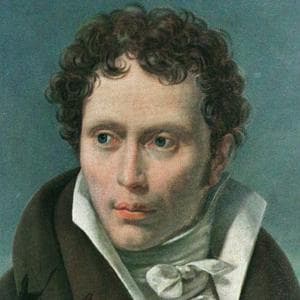
Arthur Schopenhauer
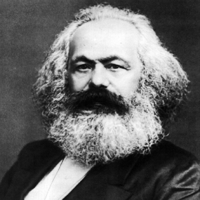
Karl Marx

Albert Camus
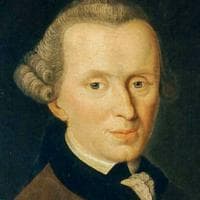
Immanuel Kant
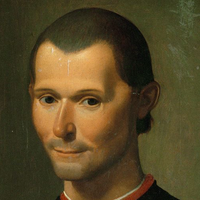
Niccolò Machiavelli

Diogenes