Han Oreum MBTI Personality Type

Personality
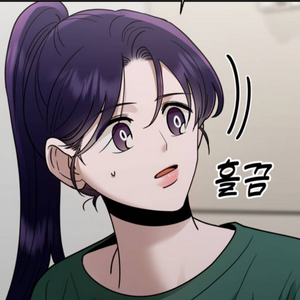
What personality type is Han Oreum? Han Oreum is an ENFJ personality type in MBTI, 2w3 - - in Enneagram, in Big 5, in Socionics.
༘♡ ⋆。˚ 𝐇𝐚 𝐘𝐨𝐨 𝐑𝐞𝐮𝐦 — 𝐄𝐍𝐅𝐉 (𝐅𝐞–𝐍𝐢–𝐒𝐞–𝐓𝐢) ˏˋ°• •*⁀➷ ˗ˏˋ 𝐂𝐎𝐆𝐍𝐈𝐓𝐈𝐕𝐄 𝐅𝐔𝐍𝐂𝐓𝐈𝐎𝐍 𝐁𝐑𝐄𝐀𝐊𝐃𝐎𝐖𝐍 ´ˎ˗ ╰┈➤ 𝐅𝐞 𝐝𝐨𝐦: ⋆.𐙚˚(𝟏/𝟐) Her most prominent and dominant function. She has exceptionally high social awareness and is highly skilled at reading the surrounding atmosphere through subtle details such as tone of voice, hidden tension, and uncomfortable silence, understanding what is left unsaid more than what is spoken At the beginning of the program, she presented a socially harmonious and gentle version of herself to achieve a specific goal. She joined the program to earn the money needed for her younger sister’s surgery, and for that reason she concealed her true motivation. Fe for her is a tool of reading and adaptation, used to calm panic and prevent escalation within the group. She understands how impressions are formed, how alliances take shape, and when to appear and when to stay in the background. In an unsafe competitive environment, she saw complete honesty as a risk, so she chose a calculated, non-confrontational social presence, with partial concealment of her motives and no intention of harming anyone. .☘︎ ݁˖ Her Fe also becomes clear when compared to Do-hyuk. In contrast to him, Do-hyuk relies on a Te-based approach: strict organization, decisive judgments, and dividing people according to their usefulness and roles in survival. She views things from a very different angle. Han Reum, through Fe, believes that uniting a group is not achieved through control or exclusion, but through building trust and warmth. While Do-hyuk seeks to impose order even if it leads to division, she tries to preserve the group’s psychological cohesion. For this reason, she often opposed his decisions to classify individuals and expel outsiders, not out of naive emotionality, but because she understood that a rigid Te approach may work temporarily, yet it creates fear and internal fractures that threaten long-term group stability. •*⁀➷Examples from the story (Fe) In the first chapter during the early interview, she stated that her motive was “finding love,” even though her real goal was winning the prize money to cover her sister’s surgery. Her early interactions with Seon-woo and Gyeom-il were calculated: kind, appreciative, and harmonious, without revealing her intentions or asserting herself. When she heard Mi-hyun and Ji-seo talking about her during the meal, she felt uneasy but did not confront them, understanding that early confrontation could harm her position in the program. Ignoring Won Gyeong-seo’s hesitation, and later stepping in to help Gyeong-seo despite her coldness, are all situations that show her use of Fe as a tool of social management rather than purely sincere emotional expression. ╰┈➤𝐍𝐢 𝐚𝐮𝐱: Her secondary function, but no less deep. Her thinking does not stop at the current event, but constantly moves toward “where is this leading?” She sees events as interconnected chains and links small details together to form a larger picture. She often feels unease before danger occurs. Ni works quietly within her, making her hesitate at times not because of confusion, but because she sees multiple possible paths and tries to choose the one with the least loss. This is why she often appears to know that something bad is coming. Her planning is internal and unspoken, and when she acts, she has already made her decision. •*⁀➷Examples from the story (Ni) From noticing the abnormal behavior of the staff—especially the scene of the employee stuffing his mouth with ice, jumping into the pool, and the cameras shutting down—she began to suspect that the program was heading toward a dangerous collapse. She did not treat these incidents as isolated events, but connected them together. Later, her analysis of the infected individuals’ traits, her anticipation of the situation worsening, and her feeling that “the program is failing” before it was officially stated all stem from Ni. Likewise, her ongoing wariness of Do-hyuk was not due to a single action, but to a pattern of accumulated decisions.