Robert Filmer MBTI Personality Type
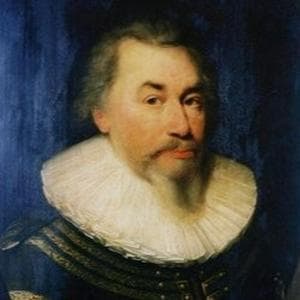
Personality
What personality type is Robert Filmer? Robert Filmer is an personality type in MBTI, 6w5 - - in Enneagram, in Big 5, in Socionics.
Seen the causes of malnutritive catholicism before the positivistic (or post-apocalyptic) revolutionaries, identitary conservatists until the two major world wars, and the anarcho-nihilists, Filmer preceded also his most famous critic in the hands of Rousseau. A French perfect equivalent is Marquess de La Bourlie for having seen before anyone else the components of libertarian catholical œcumenism that drove the order of society under Louis XIV to collapse into regalian proto-socialism as the main critique of the matriarchal marketism which induced it worldwide (until circa 1989). The aristocratic political theorist of the Camisards was most likely ENTP, and one can find a principal adherent to the patriarchal cause in the movement of apologetic glosea of the contrary form of the ideation we find most directly in Filmer himself, as he seemed to put Fe higher than the marquess did, and was much more self-preserving of his eternal goods generally, which formed his dialectically-materialist point of view around divinity as ultimately preceding the whole of the social order («necessity» and «obligation» uncoincidentally in Rousseau, who was even more an orderist in the utopical sense) recovering itself of its cartesian machinism. - Now what truly is Fe in that case ? Fe is a self-governing function that sums up the order of obligation that one passes through the election of an infinite society (patriarchal maximalism, or psychological society of divine right). It is also self-preserving in the sense that it is the most self-motivic of all functional placements, yet it is also subdued to the relative completeness of its grasp of reality, contrary to its introverted counterpart, which per se is also much more dependent on fictitious logic and social presentation. This is then the most inherently patriarchal element of Filmer's precinctive theory, as it also motivates its own societal elements on a same disambiguation of what it is to plan society into utterly complete free will (like de La Bourlie, even though it cost him his life in the hands of a Whig). And the only element that makes it this historically self-marking is its adjunction to Introverted intuition, its dependence of the illusion of divine completeness explains this internal tension that the Extraverted feeling function does not retribute. Most distinctively-speaking, Fe gives a spoken word to the tension of the identificative promises that naturally comes with the game of consciously-directed attachment, which is never complete per se BUT by itself strictly: Filmer perfectly imbued himself in that game, and this cost him first his social life an innumerous number of times, just like de La Bourlie. A sensitive marker is that he was also "interested" in witchcraft as a demonstration of the political fact of the Cogito.
Biography
Sir Robert Filmer (c. 1588–1653) was an English political theorist best known for defending patriarchal monarchy and the doctrine of divine-right kingship in his influential work Patriarcha. Writing during the political and religious upheavals of early modern England, Filmer developed one of the most systematic critiques of social-contract theory and popular sovereignty prior to the liberal tradition’s ascendancy. He argued that political authority originates in the natural and paternal structure of the family rather than in voluntary agreement among formally equal individuals. Although later liberal thinkers such as John Locke wrote extensively against him, Filmer remains an important figure in the history of political thought for articulating a rigorous defense of hierarchy, continuity, inherited authority, and pre-liberal conceptions of social order.
Related Personalities
Friedrich Nietzsche
Socrates
Arthur Schopenhauer
Karl Marx

Albert Camus
Immanuel Kant
Niccolò Machiavelli
Diogenes